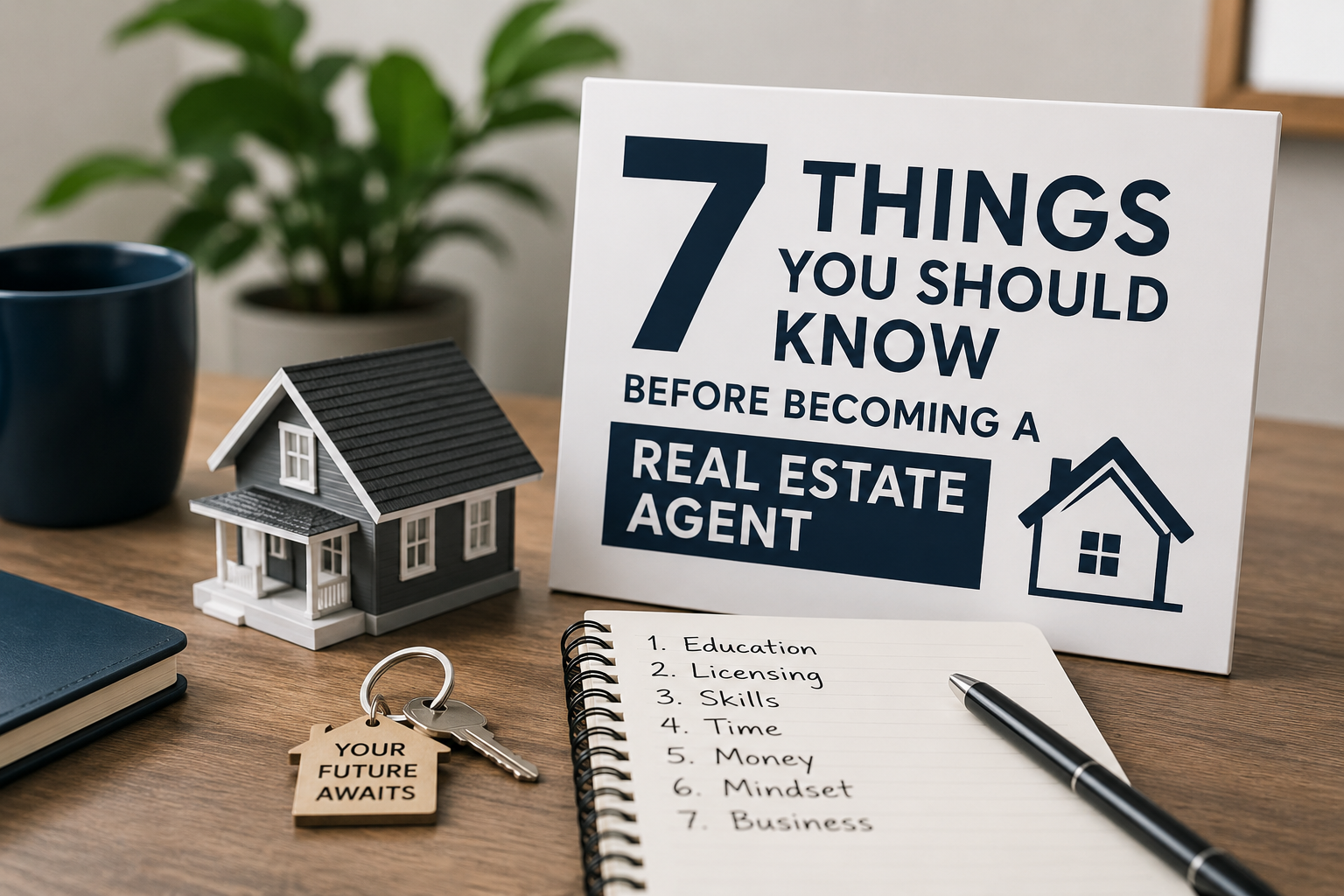
7 Things You Should Know Before Becoming a Real Estate Agent
An Honest Look at What It Takes to Build a Thriving Real Estate Career
From HGTV home reveals to glitzy social media tours, real estate is often portrayed as a glamorous world of flexible schedules, gorgeous architecture, and fast commissions. It is no surprise that thousands of ambitious individuals consider obtaining their real estate license every year.
However, the reality behind building a successful career in real estate requires far more than unlocked doors and stylish outfits. It demands entrepreneurship, relentless discipline, emotional intelligence, and business strategy.
If you are considering taking the leap into real estate—whether in North Carolina’s fast-growing Triangle market or anywhere else—here are 7 essential truths you should know before enrolling in pre-licensing classes.
1. You Are Starting a Business, Not Taking a Job
When you earn your real estate license, you aren't getting hired in the traditional sense. You are founding a small business.
As an independent contractor, there is no manager handing you daily assignments, no HR department handling your benefits, and no guaranteed base salary waiting for you on the 1st and 15th.
- Startup Costs: Beyond course tuition and exam fees, you will pay for MLS membership, national and local REALTORr® association dues, background checks, lockbox apps, marketing materials, and errors & omissions (E&O) insurance.
- Operating Expenses: Client gifts, fuel, professional headshots, domain names, CRM software, brokerage fees, E&O insurance, and other expenses can add up quickly during your first six months. Your brokerage can make a meaningful difference here, so it is worth understanding what is included before you start paying for tools out of pocket. For example, LPT Realty has no monthly brokerage fees, and agents have access to Lofty CRM at no additional cost, helping eliminate a few recurring expenses while you are getting your business off the ground. LPT also offers two commission-plan structures, giving agents flexibility to choose the model that best fits their business and goals.
- Tax Responsibilities: Nobody withhold taxes from your commission checks. You are responsible for setting aside 25% to 30% of every dollar earned for quarterly self-employment taxes.
Understanding from Day 1 that you are a business owner changes your mindset from waiting for work to actively building an enterprise.
2. Passing the License Exam Only Teaches You the Legal Rules
Completing your pre-licensing education and passing the state exam is a major milestone, but it prepares you for only one aspect of the job: compliance.
Exam prep courses focus heavily on land terminology, property law, fair housing guidelines, closing disclosure calculations, and fiduciary duties. While vital for keeping you legally compliant, licensing courses rarely teach you how to:
- Pitch a listing presentation against experienced agents
- Generate consistent client leads
- Craft winning purchase offers in competitive bidding scenarios
- Navigate tense contract negotiations after a tough home inspection
The real learning begins after you receive your license number, which is why the environment you step into matters so much. Joining the right team can dramatically shorten the learning curve by giving you access to real-world mentorship, hands-on training, proven systems, and seasoned agents you can learn from in the moments that cannot be recreated in a classroom.
A strong team does more than teach you how to fill out paperwork. It can help you understand what to say during a listing appointment, how to structure an offer strategically, how to handle difficult conversations with clients, what to expect during inspections and negotiations, and how to build a business that actually generates consistent opportunities.
Your license gives you permission to practice real estate. The people you surround yourself with can help teach you how to actually become a real estate professional.
3. Your Income Won't Be Instant (Build a Cash Buffer)
One of the biggest traps new agents fall into is expecting immediate income. Real estate operates on a delayed timeline.
Even if you sign a buyer client on your very first day as a licensed agent, finding the right home typically takes several weeks or even months if purchasing new construction builds. Once an offer is accepted, the average resale closing process takes another 30 to 45 days. That means your first paycheck could easily arrive 3 to 6 months after starting.
- Recommended Financial Cushion: Financial experts and top brokers strongly recommend having 6 to 9 months of living expenses plus startup capital saved before launching full-time.
- Pipeline Delayed Gratification: The work you do today directly determines the income you earn 90 days from now.
4. Choosing the Right Brokerage Team Makes or Breaks Your First Year
Where you hang your license matters immensely. Many brand-new agents choose a brokerage based strictly on commission split percentages, only to discover later that 100% of zero sales is still zero.
When evaluating real estate brokerages or teams, look beyond high split promises and evaluate:
- Mentorship & Accountability: Will you have a dedicated mentor reviewing your contracts and attending your first showings?
- Marketing & Admin Support: Does the team provide professional branding resources, transaction coordination, and verified digital tools?
- Culture & Collaboration: Are seasoned agents accessible and supportive, or is the office environment cutthroat?
Joining an established team can drastically shorten your learning curve. To learn more about how team models compare to traditional individual roles, read our full breakdown on The Difference Between an Agent and a Full-Service Real Estate Team.
5. Relationships & Lead Generation Drive 90% of Your Success
You do not need to be a pushy salesperson to thrive in real estate, but you do need to be a proactive communicator. You are in the business of lead generation and trust-building.
- Your Sphere of Influence (SOI): Your initial business will most likely come from people who already know, like, and trust you—friends, family, past coworkers, and neighbors.
- Consistency Wins: Successful real estate professionals consistently check in with their network, participate in local community events, and share valuable market commentary.
- Relationship Focus: High-performing agents treat real estate as a service, focusing on long-term relationships rather than quick transactions.
6. Flexibility Requires Fierce Schedule Discipline
The promise of "being your own boss" and "setting your own hours" is one of real estate's biggest attractions. However, unmanaged flexibility can quickly become a career obstacle.
If you don't control your schedule, your schedule—and your clients—will control you.
- Time Blocking: Set dedicated hours every single morning for lead generation, market research, and client follow-ups before opening your calendar to showings or errands.
- Boundaries: Clients will text, call, and email early in the morning and late at night. Establishing clear communication hours prevents burnout and sets healthy expectations.
- Weekend & Evening Availability: Home buyers usually tour properties when they aren't working. Be prepared to devote evenings and weekends to client tours and open houses.
7. Deep Local Market Knowledge is Your Ultimate Currency
To stand out in a competitive industry, you must become an undeniable expert on the communities you serve. Clients don't just hire an agent to open doors; they hire a trusted advisor who understands hyper-local pricing dynamics, school districts, future development plans, and neighborhood vibes.
For example, across North Carolina's Triangle region—from Chatham County to Raleigh and Chapel Hill—market conditions, price points, and lifestyle amenities vary significantly from town to town. Being able to explain local pricing nuances instantly builds credibility.
For a sense of how local market insights help guide buyers, explore our detailed analysis of The Cost of Living Across the Triangle.
Ready to Take Your Next Step?
Becoming a real estate agent offers unlimited earning potential, professional independence, and the profound satisfaction of helping people navigate one of life’s biggest milestones. By entering the field with realistic expectations, financial preparation, and a commitment to continuous learning, you position yourself for lasting success.
At Hart & Jahoo Real Estate Group, we believe in empowering agents through collaborative mentorship, modern marketing strategies, and dedicated operational support. If you are interested in exploring what a real estate career looks like within a supportive, growth-oriented team, we would love to connect with you.
Frequently Asked Questions
How long does it take to become a real estate agent?
In most states, completing pre-licensing coursework and passing the licensing exam takes anywhere from 2 to 6 months, depending on whether you enroll in full-time immersive courses or self-paced online classes.
How much does it cost to get a real estate license initially?
Initial startup costs typically range between $1,500 and $3,000. This estimate includes course tuition, exam application fees, background checks, initial MLS dues, Realtor® association fees, and basic marketing setup.
Should I join a real estate team or go solo as a new agent?
Joining a real estate team is often recommended for newly licensed agents. Teams provide access to leads, hands-on mentorship, transaction management support, and established brand recognition, allowing you to learn faster while earning income sooner.
How long before a new real estate agent makes their first sale?
On average, a newly licensed real estate agent makes their first sale within 3 to 6 months of active lead generation and networking.
Categories
Recent Posts