Mortgage Pre-Approval vs. Pre-Qualification: What's the Difference?
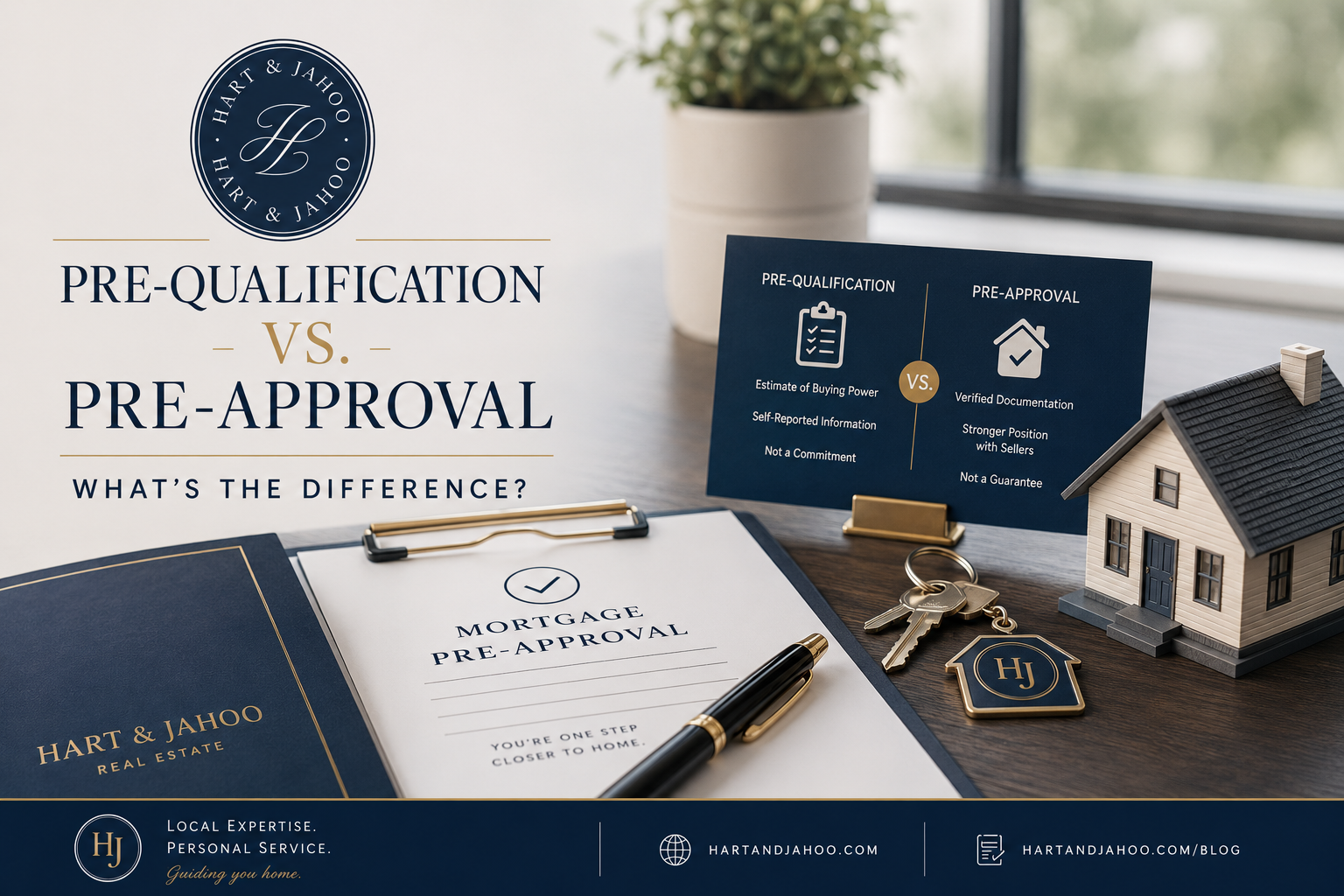
Buying a home is exciting, but it also comes with plenty of new terminology. Two of the most commonly confused terms are mortgage pre-qualification and mortgage pre-approval. While they may sound similar, they serve very different purposes—and understanding the difference can help you shop with confidence, make stronger offers, and avoid unnecessary surprises.
Whether you're buying your first home or returning to the market, knowing where you stand financially is one of the smartest first steps you can take. For more home buying tips and real estate insights, visit the Hart & Jahoo Blog at hartandjahoo.com/blog.
What Is Mortgage Pre-Qualification?
Mortgage pre-qualification is an initial estimate of how much you may be able to borrow. It's often the first step for buyers who are just beginning to explore homeownership.
In most cases, a lender will ask for basic financial information such as your income, debts, and assets. This information is typically self-reported, meaning documentation isn't usually required at this stage.
Pre-qualification can help you:
- Estimate your potential buying budget.
- Understand whether homeownership is financially realistic.
- Begin planning your home search.
However, it's important to remember that pre-qualification is not a lending commitment. Because the information hasn't been fully verified, the final loan amount may differ once a lender reviews your financial documents.
What Is Mortgage Pre-Approval?
Mortgage pre-approval is a much more detailed and formal process.
During pre-approval, a lender verifies key financial information, including:
- Income
- Employment
- Credit history
- Assets
- Existing debts
After reviewing your documentation, the lender may issue a pre-approval letter indicating that, based on the information reviewed, you qualify for a mortgage up to a certain amount, subject to final underwriting and loan conditions.
A pre-approval letter demonstrates to sellers that you're financially prepared and serious about purchasing a home.
Most pre-approval letters remain valid for a limited period, often 60 to 90 days, depending on the lender.
Key Differences Between Pre-Qualification and Pre-Approval
| Pre-Qualification | Pre-Approval |
|---|---|
| Based primarily on self-reported information | Based on verified financial documentation |
| Minimal lender review | Comprehensive lender review |
| Provides a rough estimate of buying power | Offers a more accurate purchase budget |
| Helpful for early planning | Strengthens your position when making an offer |
| Not a lending commitment | Indicates a higher level of lender confidence (subject to final approval) |
Why Pre-Approval Matters in Today's Market
Today's real estate market moves quickly, and preparation can make a meaningful difference.
A mortgage pre-approval helps buyers:
- Shop within a realistic price range.
- Focus on homes that fit their budget.
- Submit stronger, more competitive offers.
- Reduce the risk of unexpected financing issues later in the transaction.
- Move more confidently once they find the right home.
While pre-approval does not guarantee final loan approval or that an offer will be accepted, it can provide greater confidence for both buyers and sellers during the home-buying process.
When Should Buyers Get Pre-Approved?
The best time to get pre-approved is before you actively begin shopping for a home.
Ideally, buyers should obtain pre-approval:
- Before scheduling private home tours.
- Before attending open houses with the intention of purchasing.
- Before submitting an offer on a property.
Having financing already in place allows you to act quickly when the right opportunity appears.
How Hart & Jahoo Helps Buyers
Buying a home involves many moving parts, but you don't have to navigate the process alone.
At Hart & Jahoo, we help buyers feel informed and confident from day one by:
- Connecting buyers with trusted local lending partners.
- Explaining every step of the financing and home-buying process.
- Creating a customized home search after pre-approval.
- Coordinating closely with lenders, inspectors, attorneys, and all parties from contract to closing.
- Providing guidance, education, and personalized support throughout the entire journey.
Frequently Asked Questions
Is pre-qualification enough to make an offer?
While you can sometimes submit an offer with a pre-qualification, many sellers prefer buyers who have been pre-approved because it provides greater confidence that financing has been reviewed.
Does pre-approval guarantee I'll get the loan?
No. Pre-approval is an important step, but final loan approval depends on additional underwriting, the property, and other lender requirements.
How long does a mortgage pre-approval last?
Most pre-approvals are valid for 60 to 90 days, although this varies by lender.
Can I get pre-approved before finding a home?
Absolutely. In fact, this is the recommended approach because it allows you to shop with confidence and understand exactly what fits your budget.
Final Thoughts
Understanding the difference between mortgage pre-qualification and pre-approval can make your home-buying experience smoother, less stressful, and more successful. While pre-qualification offers a helpful starting point, pre-approval provides a clearer picture of your buying power and positions you more competitively when it's time to make an offer.
If you're planning to buy a home this year, start with a conversation.
The Hart & Jahoo team is here to help you understand your financing options, connect you with trusted local lenders, and guide you through every step of your home-buying journey.
Learn more: hartandjahoo.com
Read more home buying tips: https://hartandjahoo.com/blog
Categories
Recent Posts